
Smith + Nephew Completes Integrity Orthopedics Deals
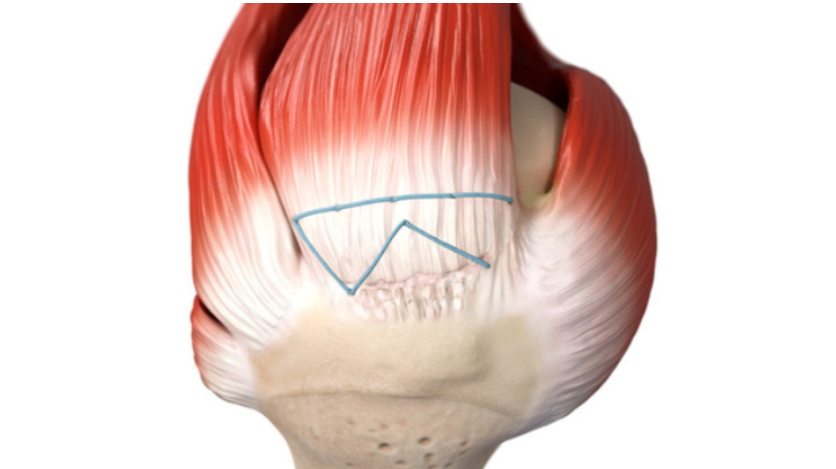
Barely a week after announcing its intention to buy Integrity Orthopaedics, Smith+Nephew has closed the $225 million deal. Executives say the move strengthens Smith+Nephew’s sports medicine shoulder repair business by equipping it with a comprehensive suite of rotator cuff repair (RCR) technologies.
The purchase agreement called for a $225 million up-front payment and a provision that requires Smith+Nephew to make up to $225 million in performance-based payments over the next five years.
Integrity Orthopaedics is a U.S.‑based, early‑stage commercial developer of Tendon Seam, a biomechanical RCR system designed to significantly reduce re‑tear rates and improve patient outcomes versus the current standard of care.
Tendon Seam allows for a novel repair stitch configuration with multiple fixation points. Its patented microanchors, continuous suture, individually locked stitches, and integrated implantation instrument aim to deliver stronger repairs, accelerated patient recovery, lower re-tear rates, and a simplified surgical technique. Early clinical experience indicates low re-tear rates, reduced sling times, and shorter procedures compared with standard methods.1 The system received U.S. Food and Drug Administration 510(k) clearance in 2023 and is designed to reattach soft tissue to bone, including tendons, ligaments, and joint capsules.
“Arthroscopic biomechanical rotator cuff repair techniques using sutures and anchors have remained largely unchanged for over 15 years,” stated Dr. Howard Harris, an orthopedic surgeon at Texas Orthopedic Specialists and part of the Tendon Seam design surgeon team. “Tendon Seam technology represents a significant innovation in rotator cuff repair technique. It gives me a more anatomic, stronger and efficient repair option that offers my patients a better chance of a successful recovery.”
RCR is a growing market segment with approximately 500,000 U.S. procedures performed annually.2 Despite this, traditional surgical techniques have historically suffered from high structural failure rates, averaging 20%–40%.3
Tendon Seam complements the REGENETEN Bioinductive Implant, giving Smith+Nephew a differentiated, disruptive RCR portfolio, as the two solutions represent the most advanced technologies currently available for biomechanical repair and biological augmentation, company leaders claim.
“Surgeons and patients deserve a rotator cuff repair solution that delivers results they can count on,” said Christie Van Geffen, senior vice president of Sports Medicine Marketing for Smith+Nephew. “They now have that with Tendon Seam and REGENETEN, and we look forward to helping more tendon repairs heal, improving patient outcomes, and setting a new standard of care.”
Tendon Seam is currently available in the United States. Similar to post-acquisition efforts with the REGENETEN Bioinductive Implant, Smith+Nephew plans to accelerate adoption leveraging its commercial U.S. channels while building a base of evidence to support global adoption.
Smith+Nephew is a portfolio medical technology business focused on soft and hard tissue repair, regeneration, and replacement. Its 17,000 employees strive to make a difference in patients’ lives through products and the invention and application of new technologies across three global business units—Orthopaedics, Sports Medicine & ENT, and Advanced Wound Management.
Founded in Hull, U.K., in 1856, Smith+Nephew operates in more than 100 countries, and generated $5.8 billion in 2024 sales. Smith+Nephew is a constituent of the FTSE100.
References
1 Data on File at Integrity Orthopaedics.
2 SmartTRAK, 2025, Shoulder Soft Tissue Fixation, 2025 BioMedGPS — SmartTRAK.
3 Hein J, et al. Arthroscopy. 2015;31(11):2274-2281.
Full Story: Here
Related posts
Lorem ipsum dolor sit amet, consectetur adipiscing elit.

GMMDC Member Takes Part in Orthopedic Innovators Q&A

